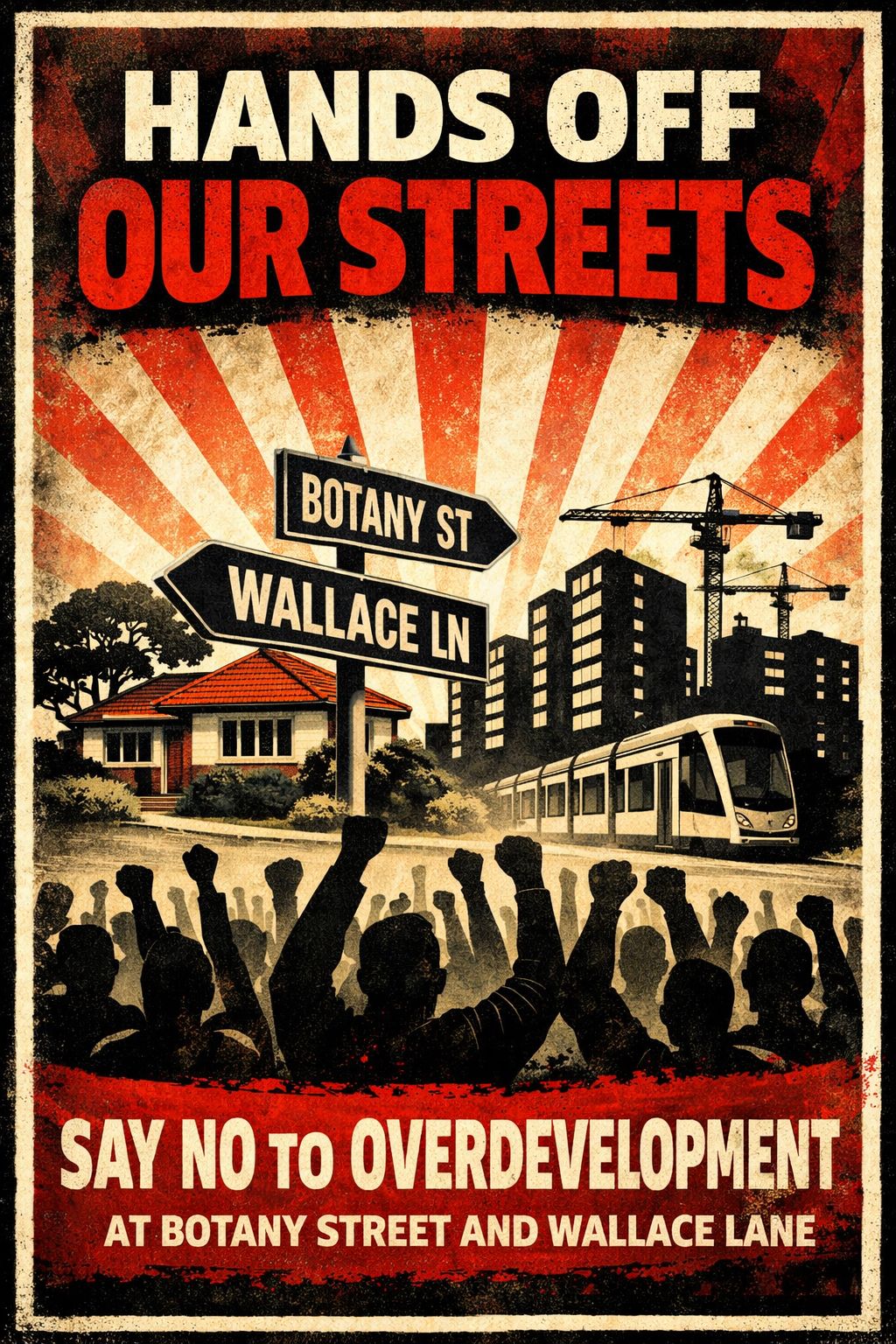
Developers are using State Government housing provisions to override planning controls that Randwick City Council set democratically for our neighbourhoods. We are challenging it on legal, planning, and community grounds.
Developers are lodging State Significant Development applications that use the NSW Housing SEPP to override Randwick City Council's planning controls. These controls were set by elected councillors through a democratic process designed to reflect what our community wants for its neighbourhoods.
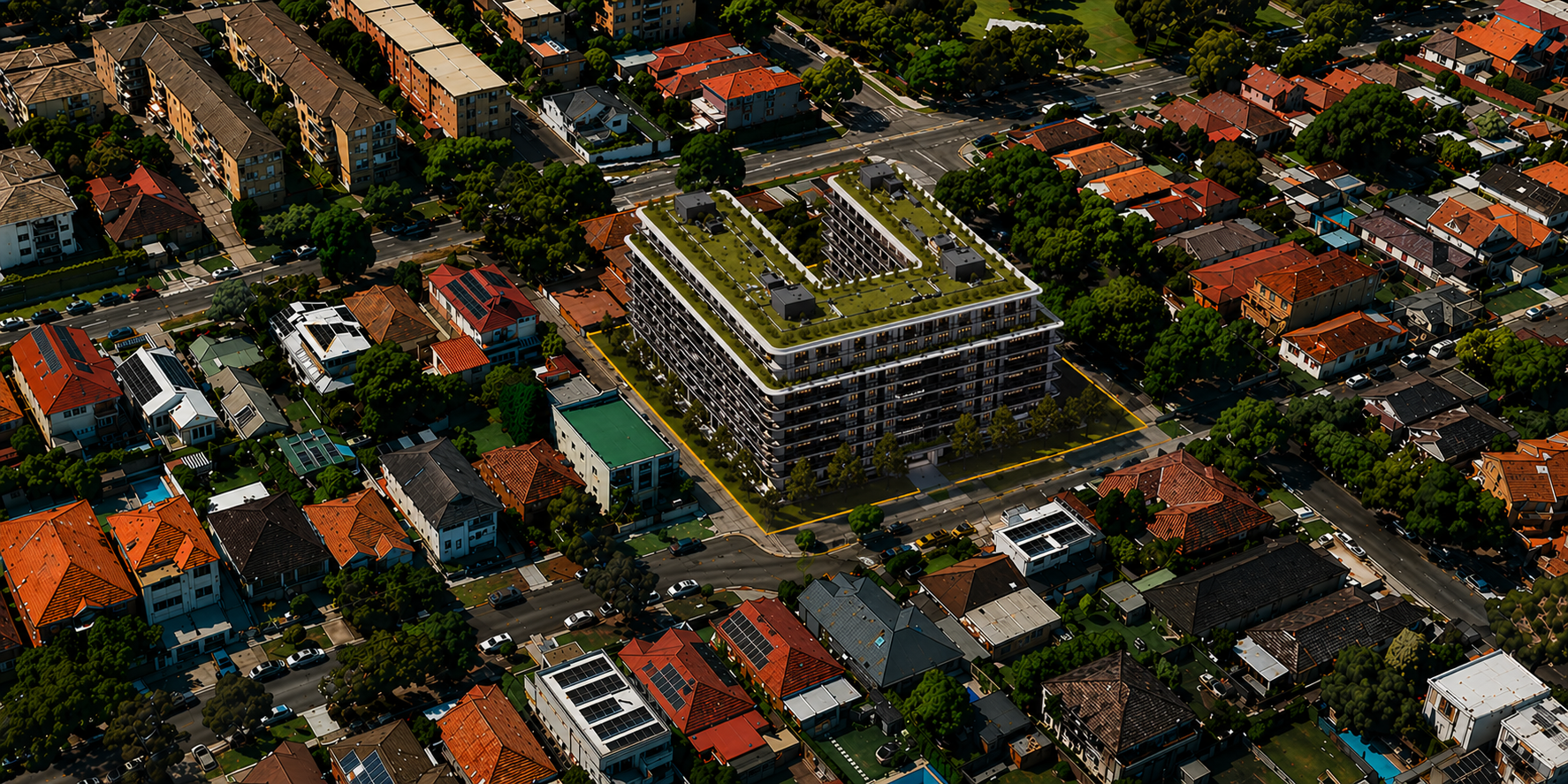
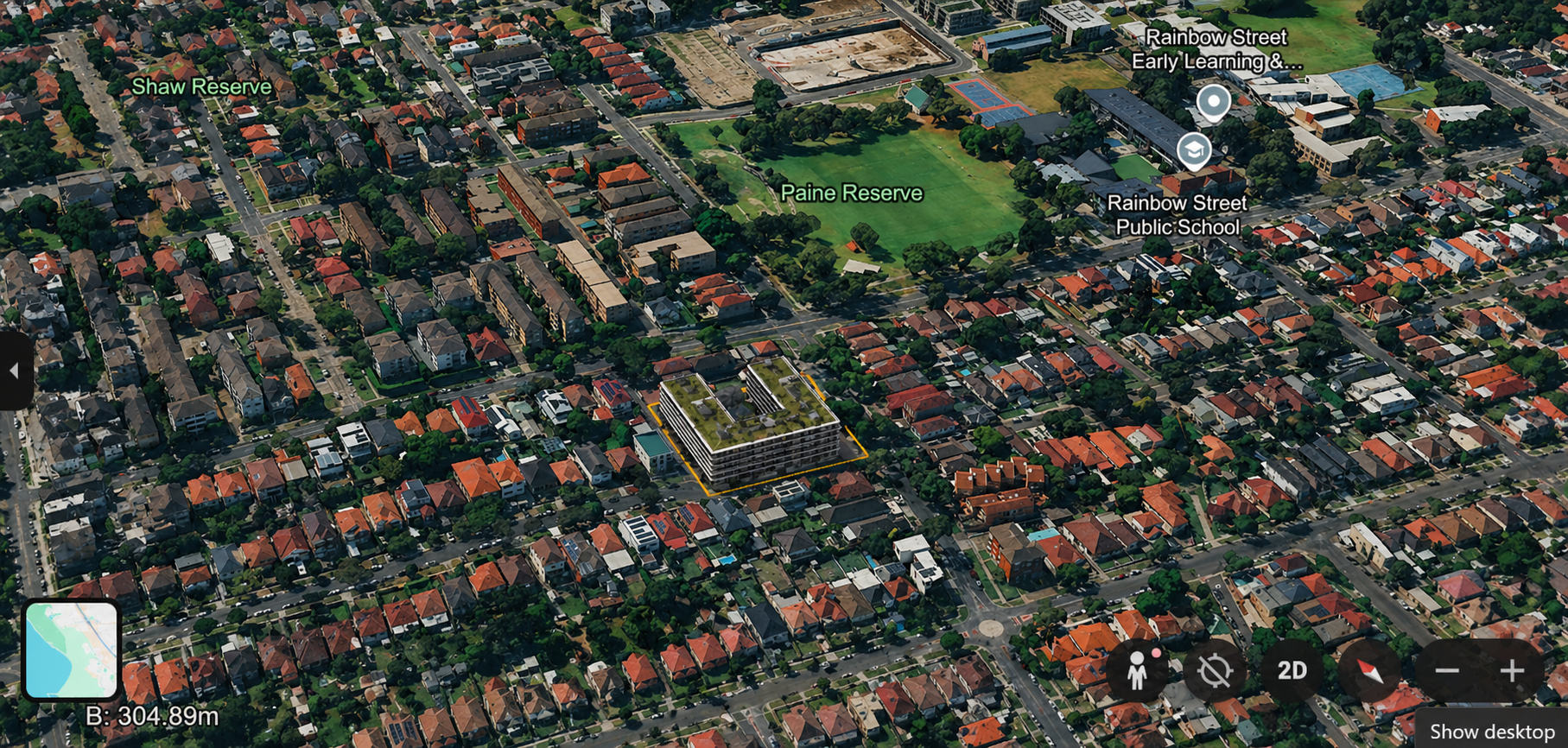
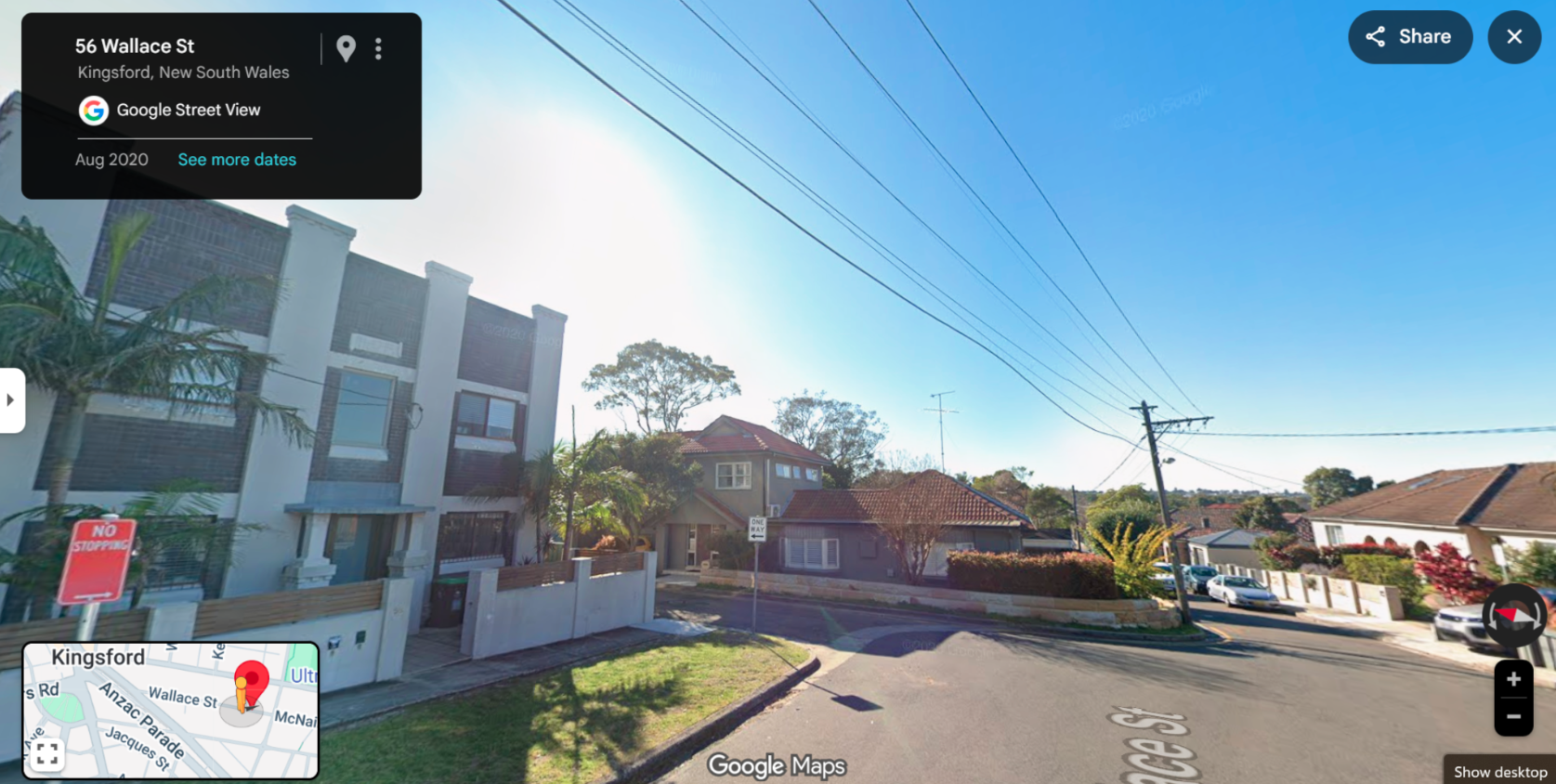
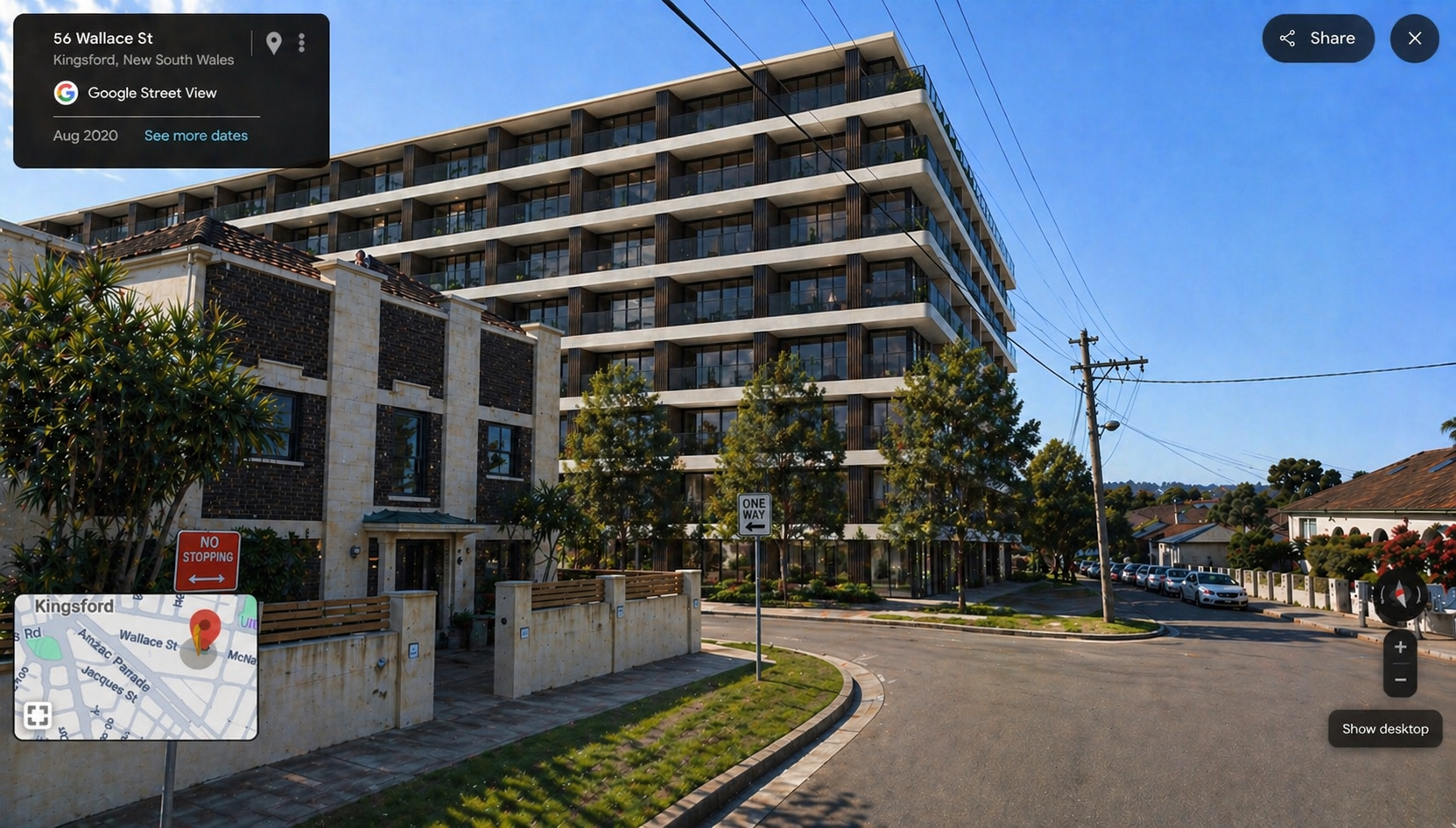
The first application, SSD-97050208, proposes a nine-storey residential building at 118-124 Botany Street and 58-60 Wallace Street in Kingsford. This would tower over Wallace Lane, a laneway only 4.84 metres wide, surrounded by single-storey and two-storey homes. It exceeds local height controls by approximately 80%.
A second proposed development on Church Street uses the same controversial "bonus stacking" provisions to exceed local controls. The same legal uncertainty affecting the Kingsford application applies there too.
On 24 March 2026, Randwick City Council unanimously resolved to support and assist residents opposing SSD-97050208. The Kingsford East Precinct Committee has also passed a motion to support local residents in opposing the development.
The applications exploit a combination of Low-and-Mid-Rise (LMR) housing provisions and the in-fill affordable housing bonus to produce heights and densities far beyond what any planning authority envisaged for these streets. To use the State Significant Development pathway, a development must also exceed a Capital Investment Value of $75 million. Our analysis suggests that if the correct LMR controls are applied, the project at its proper scale may not reach that threshold, which would remove the basis for State-level assessment entirely and return the application to Randwick City Council.
SSD-97050208. Nine storeys proposed. Currently in Prepare EIS stage. Adjacent to a 4.84m laneway and one-storey homes.
View on Planning Portal →DA/1205/2025. Relies on the same bonus stacking provisions, raising the same legal questions about stacking LMR and affordable housing bonuses.
The coalition has identified six substantive grounds challenging the validity of the applications and their approval pathway.
To access inner-area LMR standards under Housing SEPP Chapter 6, s.163, a site must be within 400 metres walking distance of a Light Rail platform. The applicant's surveyor incorrectly claimed 360.83 metres to the Juniors Kingsford Light Rail station. Independent measurements using the Department's own LMR Viewer (434.04m) and Google Earth (432.15m) both exceed the threshold. The difference is methodology: the independent measurements were taken to the platform itself, which is the correct endpoint. The Juniors Kingsford Light Rail station has no public entrance, meaning the platform is the correct statutory endpoint for measuring walking distance.
If correctly classified as outer area, the maximum non-discretionary height falls to 17.5 metres. Even with a 30% affordable housing bonus, the resulting scale falls well short of what is proposed, and likely below the $75 million Capital Investment Value required to use the SSD pathway at all.
Housing SEPP / LegalThe applicant's own webinar acknowledged that the proposed development breaches aviation height regulations. This is not a disputed finding: it is an admission by the proponent. As raised during that webinar, the proposed building height of RL 69.93 penetrates the Airport Obstacle Limitation Surface (OLS) by up to 19 metres. The breach affects both construction cranes during the build and the completed rooftop. A development whose applicant concedes it violates aviation safety controls should not receive approval without a full, independent assessment of those implications.
Safety / AviationBoth the Kingsford and Church Street applications stack two separate bonus regimes: the LMR non-discretionary standards and the in-fill affordable housing bonus. While a 2025 Housing SEPP amendment gave some legal effect to stacking, the provision remains genuinely uncertain. At stake is whether the bonus is calculated on top of already-elevated LMR heights or on LEP base controls. The coalition is petitioning Randwick City Council to close this gap via an LEP amendment under s.3.28(4) of the Environmental Planning and Assessment Act 1979.
Planning LawA nine-storey wall directly adjacent to Wallace Lane, which is only 4.84 metres wide, would impose severe overshadowing on neighbouring single-storey and two-storey homes for most of the day. Upper-floor apartments would have direct sightlines into the private courtyards and living spaces of surrounding residences. The bulk and scale of the proposal is fundamentally incompatible with the existing low-density streetscape and the character Randwick's LEP was designed to protect.
Amenity / Built FormA development of this scale would generate over 100 additional vehicles on an already-constrained local road network. The interface between Botany Street, Wallace Street, Wallace Lane and Rainbow Street is already under significant pressure during peak periods. The eastern side of Wallace Street and Wallace Lane are prohibitively narrow, making it incapable of absorbing additional construction and operational traffic. There is a clear lack of consideration for the real-world traffic impacts on the surrounding community, and for the amenity of both existing residents and future occupants.
Traffic / InfrastructureThe eastern side of Wallace Street slopes downward toward the intersection with Botany Street, creating existing flood risk in this part of the street. A development of this scale would significantly increase impervious surface coverage and alter stormwater drainage patterns in an area already prone to flooding. Flood risk is also a recognised possible exception to the application of the LMR non-discretionary standards under Section 6 of the Housing SEPP. Where a site is affected by flooding, councils and the Department retain greater discretion to refuse or condition development regardless of the non-discretionary height and density standards that would otherwise apply. This is a ground the coalition intends to press in formal submissions.
Flood RiskWe call on the Minister for Planning and the Department of Planning, Housing and Infrastructure to act on the following before any determination is made.
This petition is being presented to the Minister for Planning and Randwick City Council. Every signature strengthens the case that these applications raise serious legal questions and lack community support.
Sign the Petition →Residents across Randwick LGA are welcome to sign. Your name and suburb are sufficient.
A timeline of the applications and the community's response.
The Kingsford South Housing Investigation Area is rezoned to R3 Medium Density Residential. Planning controls for the Housing Investigation Areas are formally established on this date, reflecting Randwick City Council's considered and community-endorsed vision for the scale and character of development in these streets. These are precisely the controls the current SSD applications seek to override.
The NSW Government activates LMR provisions under the Housing SEPP. No guidance is issued on whether LMR non-discretionary standards and the in-fill affordable housing bonus may be stacked.
Despite being labelled a "Lane Cove LEP Amendment," this instrument actually amended the Housing SEPP 2021 to include the Low-and-Mid-Rise provisions (Section 6) within the scope of where the infill affordable housing bonus applies to maximum permissible height and FSR. The Lane Cove LEP itself was not changed. The amendment was a direct response to the legal gap created by LMR commencement, and clarifies that the affordable housing bonus should be calculated against LEP base controls, not LMR-derived standards. Other councils, including Randwick, remain exposed to the same gap until equivalent protections are in place.
The State Significant Development application for Botany Street and Wallace Street, Kingsford is lodged with the Department of Planning, Housing and Infrastructure.
The Department of Planning, Housing and Infrastructure issues Secretary's Environmental Assessment Requirements (SEARs) for SSD-97050208, setting out the matters the applicant must address in the Environmental Impact Statement.
A third-party consultant, Sarah George, contacts local residents by physical letter informing them of SSD-97050208 for the first time. This is the first many residents knew of the application. The Randwick Coalition of Owners and Residents forms in direct response, bringing together neighbours across the affected streets to coordinate a formal challenge.
The coalition writes to the Minister for Planning raising the 400-metre walking distance non-compliance and requesting intervention before the application is determined.
Councillor Luxford moves a motion at Randwick City Council, which passes unanimously, resolving that Council support and assist residents opposing SSD-97050208 (File Reference F2026/00091).
The Kingsford East Precinct Committee passes a motion to support local residents in opposing the development, adding a second formal democratic expression of community support.
The Environmental Impact Statement for SSD-97050208 is expected to be submitted in April 2026, after which the Department will place it on public exhibition. This will open the formal submission period for residents. All residents are urged to register for updates now.
The campaign depends on residents making their voices heard across multiple channels.
Add your name to the formal petition being presented to the Minister for Planning and Randwick City Council.
Sign now →Contact your Randwick City Councillors to thank them for their unanimous vote and urge continued advocacy with the State Government.
Find your councillor →Contact the Minister for Planning directly to register your opposition and call for independent re-measurement and legal clarification on bonus stacking.
Contact DPHI →Every resident of Randwick LGA has a stake in whether State planning powers can override democratically set local controls. Share widely.
Share this page →Get updates on meetings, the EIS exhibition period opening, and next steps. Contact us to get on the mailing list.
Get in touch →Ask your local NSW MP to raise the questions of walking-distance measurement integrity and bonus stacking in the Legislative Assembly.
Find your MP →Create a free NSW Planning Portal account so you are ready to lodge a formal objection when the EIS exhibition period opens. Submissions must be made through the Portal and you will need an account before you can submit.
Register now →No. The coalition fully supports well-planned, appropriately-scaled housing in Randwick LGA, including affordable housing. Many of us actively support increasing housing supply near transport.
Our objection is specific: to applications that do not comply with the statutory thresholds that activate State-level planning powers, and that exploit legal uncertainty to produce outcomes no planning instrument was designed to allow. We are asking that the rules be followed and that the process be transparent. Good housing policy cannot be built on non-compliant applications or opaque processes.
A State Significant Development (SSD) is assessed by the NSW Department of Planning, Housing and Infrastructure rather than local council. To qualify as an SSD, an infill affordable housing development in Greater Sydney must have a Capital Investment Value of at least $75 million. Certain Housing SEPP provisions then allow developments near transit corridors to rely on "non-discretionary standards," meaning the consent authority cannot refuse them on height or floor space ratio grounds if those standards are met. Importantly, this restriction applies to the consent authority itself (whether that is the Minister, the Department, or the Independent Planning Commission), not just to Council.
Our position is that those standards are not met in these applications, and that the legal basis for the bonus stacking used is not established in law.
Under Housing SEPP Chapter 6, s.163, a site must be within 400 metres walking distance of a Light Rail platform to qualify for the most intensive "inner area" non-discretionary standards. Where a Light Rail platform has no public entrance, the walking distance must be measured to the platform itself. Juniors Kingsford has no public entrance, so the platform is the correct statutory endpoint.
The applicant's surveyor incorrectly claimed 360.83 metres. Independent measurements using the Department's own LMR Viewer (434.04m) and Google Earth (432.15m) both exceed the 400-metre threshold when measured correctly to the platform. If this is upheld, the site falls into the LMR outer area, where the maximum non-discretionary height is 17.5 metres. Even with the 30% infill affordable housing bonus added on top of that, the resulting height remains well below the nine storeys proposed. At that reduced scale, the development would also likely fall below the $75 million Capital Investment Value required to use the SSD pathway at all.
The Housing SEPP contains the LMR regime (Chapter 6) and a separate in-fill affordable housing bonus. These applications calculate the affordable housing bonus on top of already-elevated LMR non-discretionary heights, rather than on the base controls in Randwick's LEP. The legal uncertainty turns on how the Housing SEPP defines "maximum permissible building height" for the purpose of the bonus calculation:
"maximum permissible building height means the maximum building height permitted on the land under Chapter 5 or 6, where relevant, an environmental planning instrument, other than this Policy, or a development control plan."
The inclusion of "Chapter 6" (the LMR chapter) in that definition means the bonus can arguably be stacked on top of LMR non-discretionary heights, producing outcomes far beyond what Randwick's LEP was designed to allow. A 2025 Housing SEPP amendment gave some legal effect to this reading, but the provision remains genuinely uncertain in how it should be applied.
The coalition is petitioning Randwick City Council to close this gap. Section 3.28(4) of the Environmental Planning and Assessment Act 1979 allows a Local Environmental Plan to specify how inconsistencies with State planning policies are to be resolved, giving Council a direct mechanism to anchor bonus calculations to LEP base controls across all R3-zoned land in the LGA.
On 24 March 2026, Randwick City Council unanimously passed a motion moved by Councillor Luxford (File Reference F2026/00091) resolving that Council support and assist residents opposing SSD-97050208. Councillors from across the political spectrum agreed that the application raises serious concerns. The Kingsford East Precinct Committee has also passed a motion to support local residents in opposing the development.
SSD-97050208 is currently in the "Prepare EIS" stage. The public exhibition period has not yet opened. When the Environmental Impact Statement is placed on exhibition, a formal community consultation period will begin and residents will be able to lodge submissions directly with the Department. Sign the petition and join our mailing list to be notified when that period opens.
For SSD-97050208, the consent authority is the Minister for Planning and Public Spaces, currently Paul Scully. In practice, the Minister may delegate the decision to a senior planning officer within the Department of Planning, Housing and Infrastructure.
However, if Randwick City Council lodges a formal objection during the exhibition period, or if 50 or more independent objections are received from local residents, the consent authority automatically moves to the Independent Planning Commission (IPC). The IPC is an independent body that holds public hearings and makes its own determination. This is one reason why resident submissions during the exhibition period matter so much.
We are a group of residents and home owners across Randwick LGA who have come together to oppose SSD-97050208 and advocate for transparent, accountable planning.
We are not a political organisation. We include residents from across the political spectrum united by a single concern: that planning rules set by and for our community should not be overridden without the law being followed properly.
For general enquiries, to join the coalition, or for media enquiries, use the contact form below.